
De Luca / Tartaglia

by Christine de Luca
The Tartaglia family, headed by Antonio, a farm labourer/ shepherd from Picinisco, and Theresa (née Di Angelis, from Atina) walked to Edinburgh as a young couple in the late 1890s. They settled in the Grassmarket, near Antonio’s brother John, and ran an ice-cream hand-cart.
The De Luca family, was headed by Donato and Angela
(née Tomaso), from Cassino, who met and married in Clerkenwell, London, where they had been brought by a farmer. He was a contadino from the Calle, Atina. He started with a small lemonade stall. Two younger sons, Peter and Willie, later moved to Edinburgh.
[spoiler name=”Photo gallery” ]








[/spoiler]
[spoiler name=”Slideshow”]
[/spoiler]
[spoiler name=”Videos : Christine de Luca” ]
Read the poems in the ‘Walking Through Thyme’ booklet (PDF)
[/spoiler]
[spoiler name=”Family history”]
Tartaglia
1st generation
Antonio Tartaglia (born 1873), a farm labourer/ shepherd, from Picinisco, married Theresa Di Angelis (born 1873). She came from Lecoste, in the valley below the volcanic plug of old Atina, where her two brothers had a small subsistence farm. She was in service in Atina and had learned a fair bit from that. They married in Picinisco on 3/11/1897, age 24. Neither had had education; neither was literate; neither could speak other than Paesano (local dialect). Antonio reputedly learned English through comics.
Antonio’s brother, John Tartaglia, had come to Edinburgh and settled in the Grassmarket. He must have sent for his younger brother. Antonio and Theresa walked from Atina, busking as they went, and perhaps getting some seasonal work. They had no luggage. They must have got some money for crossing the Channel – possibly by a tug boat. They too settled in the Grassmarket around 1898-1900. Possibly his brother helped them settle. Antonio started with an ice-cream hand-cart in the Grassmarket. In the 1901 census they were at 90 Grassmarket. They were both 28 and their first child, Ralph, was 9 months old. By the 1911 census (age 37) – and still at 90 Grassmarket – he was listed as an ice-cream vendor and as an Italian National.
They had 4 children and Ralph was 10. By 1915 – 16 records are similar ( see VR100/321/ 284 and 285) Antonio Tartaglia is listed as the Refreshment Room Keeper at number 80 as well as the ice cream dealer at 88. (Ref at end) It looks as if Antonio was already showing a flair for business.
They worked hard and prospered and eventually had a big fish and chip restaurant business in Haymarket. (The waitresses were smartly attired and the tables had silver teapots, cream & sugar with Tarry’s Restaurant engraved on them.) Antonio learned English but Theresa never managed. They moved house to a flat at 16 Grove Street. Their family expanded. By 1924 they had moved to larger apartments at 26 Grove Street.
Second generation
Ralph Tartaglia born c 1899-00
Maria (Mary), married Joseph di Rollo from Roccaseca and had Reno, Ivor, Norma and Anne
Anna – married Vincent Valente, late 1920s and Louis Fusco after 1940
Lena – married John Caira c 1950. He came directly from Atina, with no money, worked in the F&C shop. He had fought on the Italian side in Abyssinia.
Dominic (Dom) – married Carol, a Scottish (Protestant) woman. They has one son Victor.
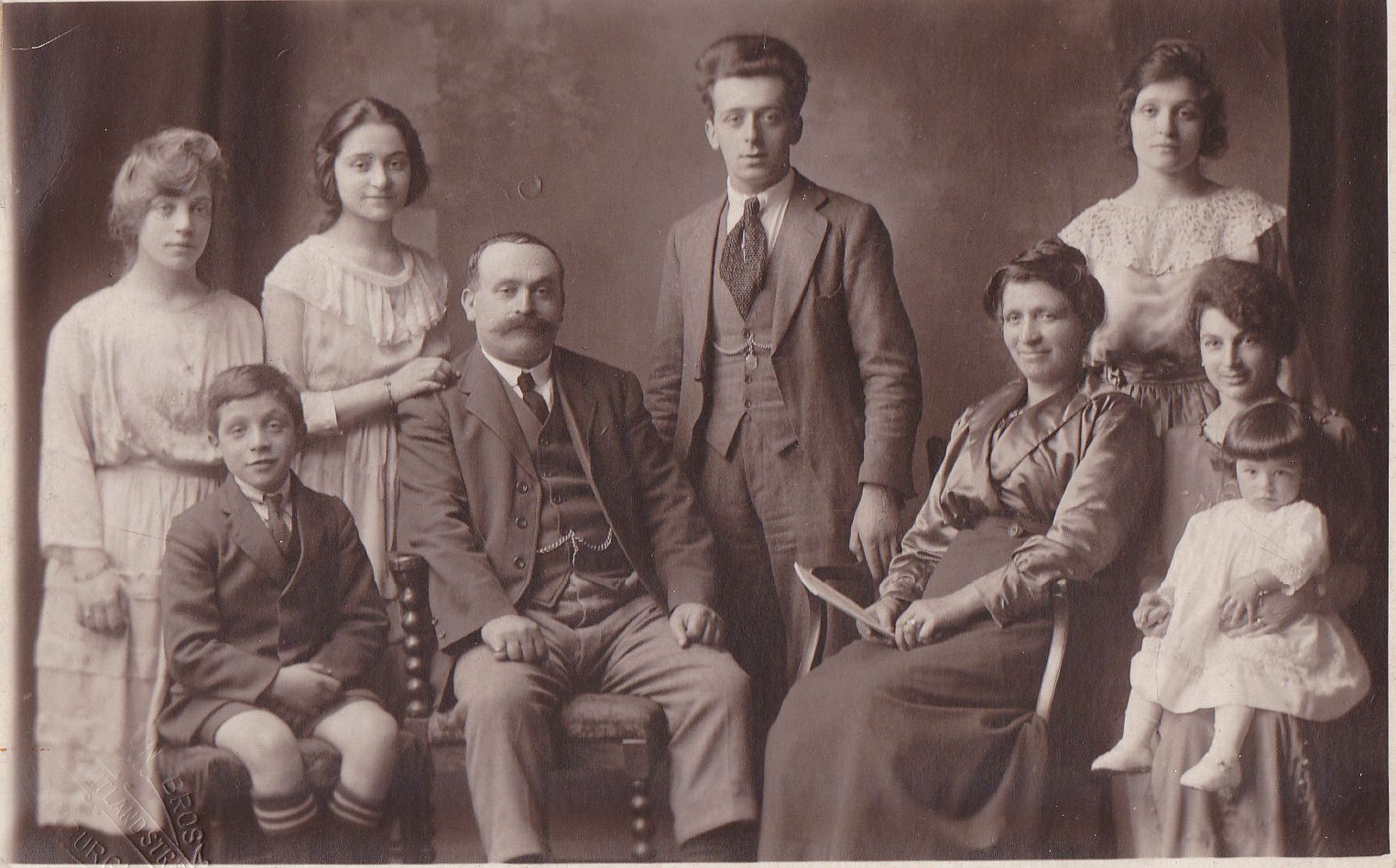
Photo: c 1923 Back row: Lena, Anna, Ralph, Marie Front row: Dom, Antonio, Theresa (in her late 40s), Theresa (wife of Ralph) with Sylvia (1921) on her knee
Poem : Wrapping the last supper
Ralph (1899-00) met Theresa De Luca in Atina. She was a young midwife, working in Rome for one of the royals at that time (and had learned Italian.) She was an older sister in a biggish family of De Lucas. They had a farm on the slopes in the old town. He was c 21 when they married; she was 24.
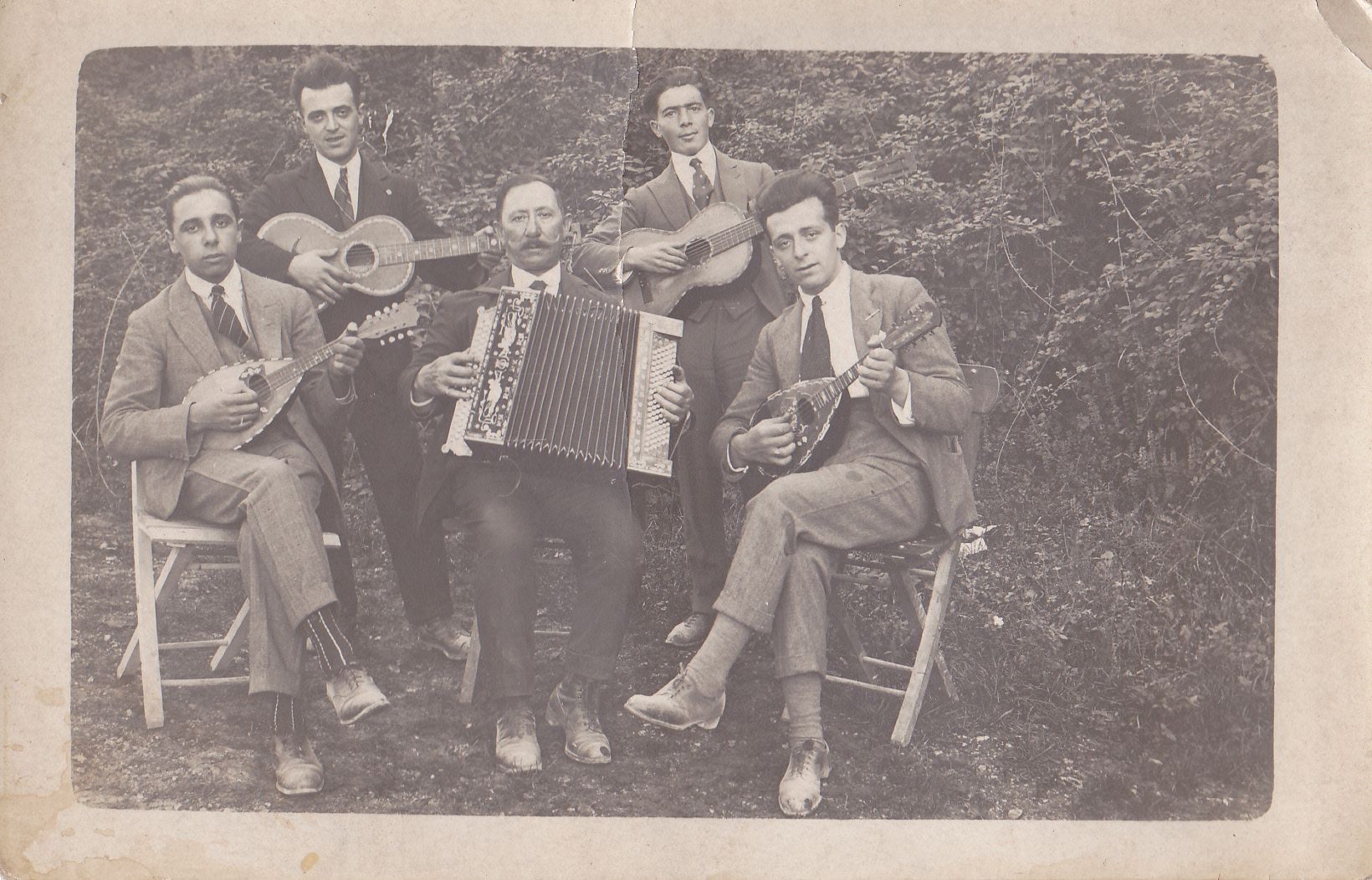
Ralph was reputedly sociable. He’s the one on the right with the mandolin. (Taken while in Atina.)
The forbears of Theresa De Luca (later the young Mrs Tartaglia) were Peter De Luca (father and farmer) and Philamena (?) They had:
Antonella (unmarried, district nurse) – stayed in Atina.
Theresa moved to Edinburgh to marry Ralph Tartaglia, who was born in Scotland
John – married, big family (c10) including Daria, Bruno (Edinburgh and Peebles then Atina), Peter ….who moved to Edinburgh) and who remained in Atina in the farm house Conchetta (Connie) – married and moved to Massachusetts; had family Rosa – married and moved to Massachusetts; had family
Amelia – married Mr Angelucci from Airdrie and moved to Gorgie, Edinburgh where they had a confectionery. They had 2 sons (Fausto and Peter) and two daughters (Assunta and Yolanda)
Gratiella – married late, no children and remained in Atina
Third generation – part 1
Ralph and Theresa lived with Ralph’s parents at 16 and, later, at 26 Grove Street. Sylvia was born at no 16, the remainder at no 26. Two of Ralph’s sisters, Anna & Lena, also lived en famille. By this time Anna’s first husband had died and she was single again. Their father Antonio was running a successful fish & chip business at the Haymarket end of Dalry Road (now an Indian restaurant).
After Antonio retired, it eventually became Lena’s (plus a flat in Dalry Road). Anna (remarried to Louis Fusco) had Dumas gown shop across the road and a flat in Haymarket Terrace. Antonio also helped the rest of his family set up, e.g. he bought Ralph a shop and flat in Stockbridge in Perth Street (c 1934); Dom a F&C shop in Corstorphine. Later he bought a business in Sighthill for Ralph’s family (his grand-children) to share and a house in Sighthill for Ralph’s widow. Sylvia however stayed on with the grand-parents.
Sylvia 5/10/1921
Lydia 13/9/1924
Tony 1931
Raymond 1933
Photo circa 1932 – Ralph, Theresa with Sylvia, Lydia and Tony
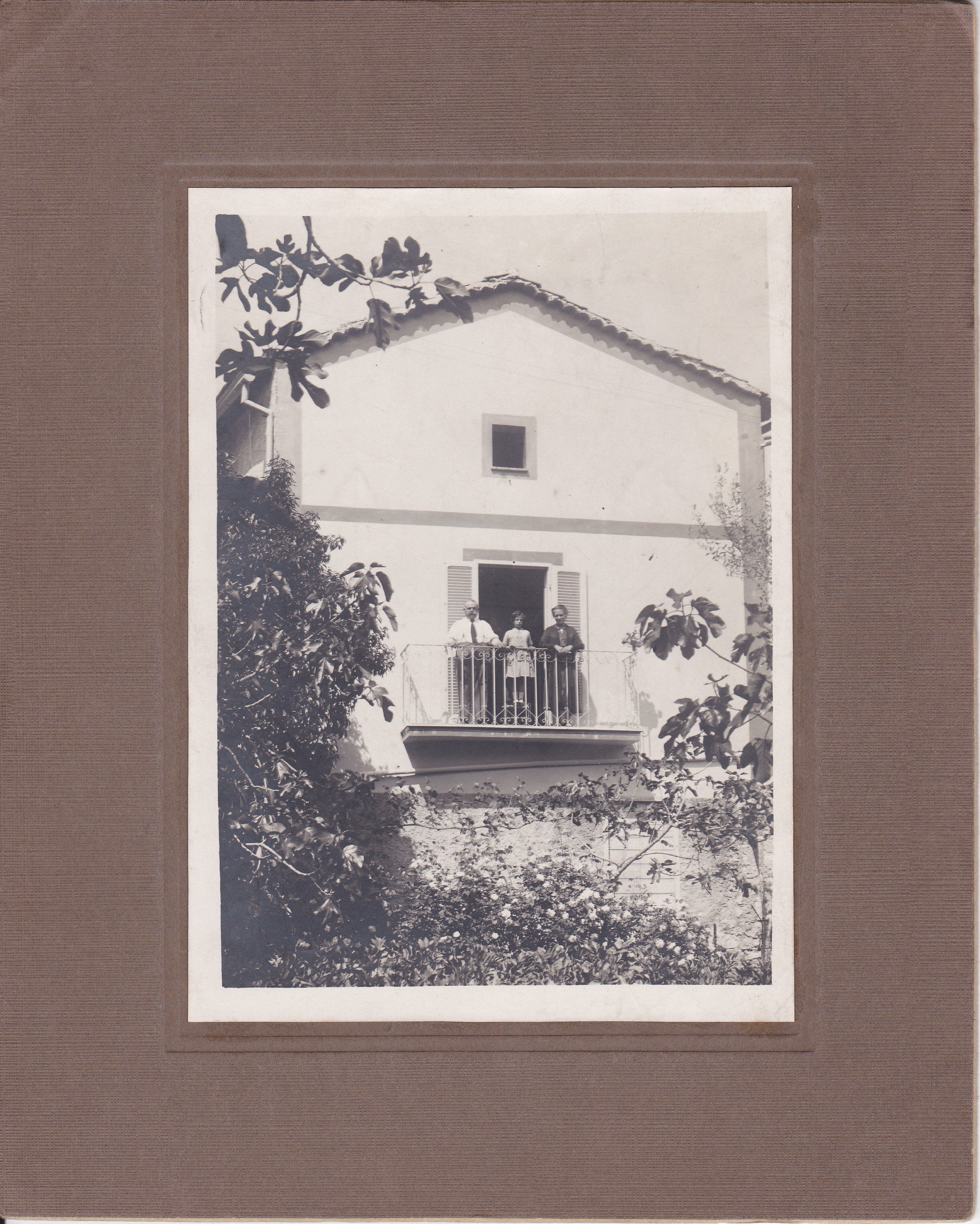
Theresa Tartaglia’s parent (De Luca’s) had converted a barn (attached to the family farmhouse) into a self-contained unit as a dowry for Theresa. Theresa’s sister-on-law Anna persuaded her to let her buy it – this was allowed on the understanding that it went back to her sister-in-law’s family. It didn’t quite work out. This photo shows Sylvia age circa 7 at this property circa 1928 with her Tartaglia grand-parents. They kept her in Atina for two and a half years at this time – she never knew why. She went to school in Atina. Her future husband (Peter De Luca) was also staying in Atina with his parents (from Watford) at the time! They met at school there. Poems, written after staying at Atina with Willie De Luca and listening to childhood stories of when he stayed there as a boy circa 1930:
Keeping body and soul together
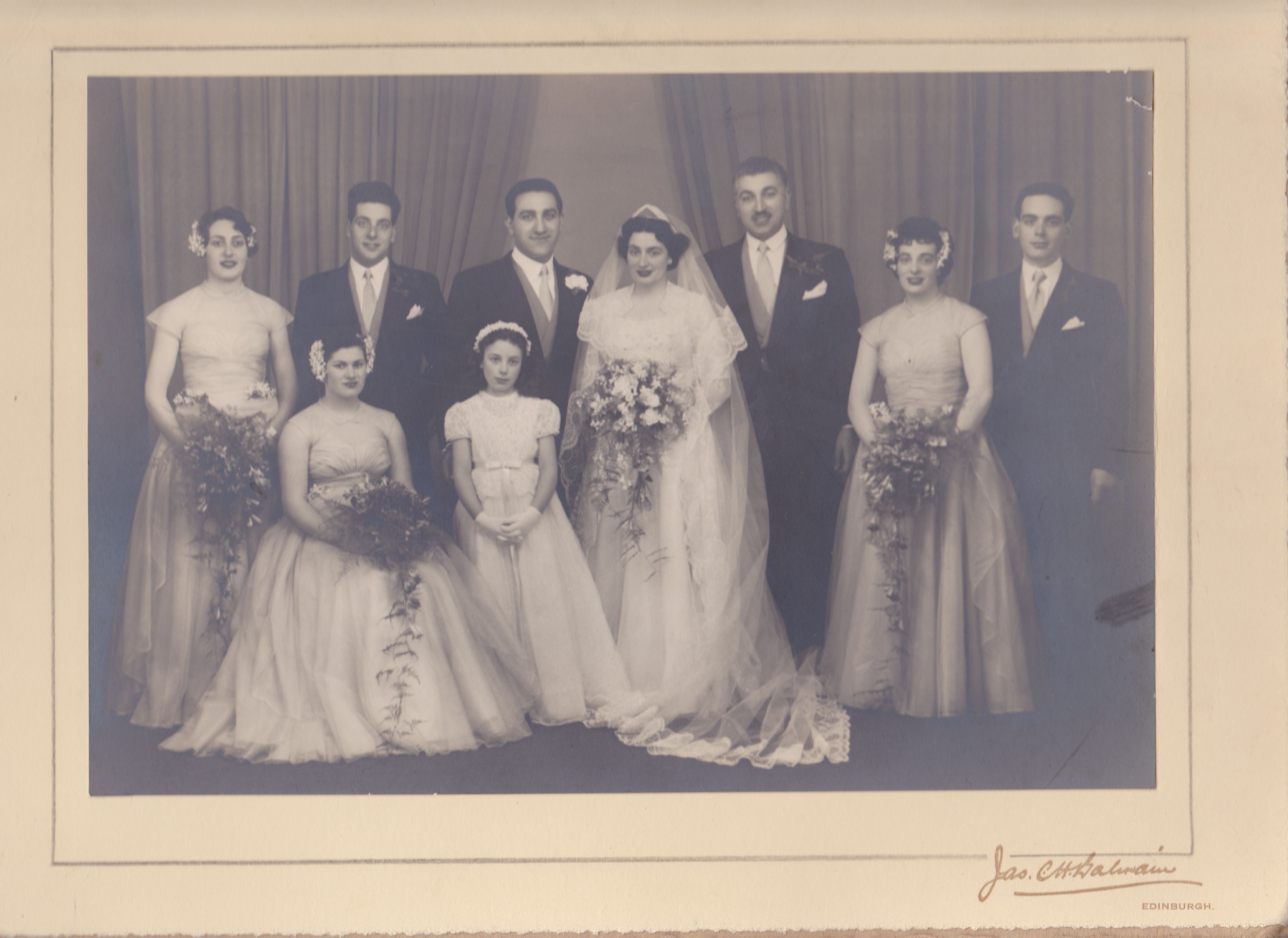
About this time Anna married for the first time (circa 1928-9). She had met Vincent Valente in Italy. He had been in Belgium and in the USA. Her parents were not happy about her marrying Vince. Her father offered to pay his fare back to the USA rather than marry but Anna would hear none of it. The wedding went ahead (lavish – her four cousins as bridesmaids and her two sisters (gold-coloured dresses). Her sister Mary’s husband, Joe Di Rollo, as groomsman and her nieces and nephews – Sylvia, Lydia, Reno and Ivor – as train-bearers. Her father bought them a fish restaurant with a flat above in Great Junction St. They went to the USA together but she came back and Anna applied for a divorce. (He died before the divorce came through.)
Third generation – part2
As mentioned before, Ralph, Theresa and three of the family eventually moved to 12 Perth Street, a tenement flat in Stockbridge, where they had a F&C shop. They were there during WW2. Ralph was often poorly and Theresa had to keep the business going. He was often taken to Italy by his mother for the good of his health (TB). He was in Atina in 1939 at the outbreak of WW2 – probably had dual nationality – and that was a reason why he was interned in Saughton Prison; that and his membership of the Picardy Place Fascist Club.
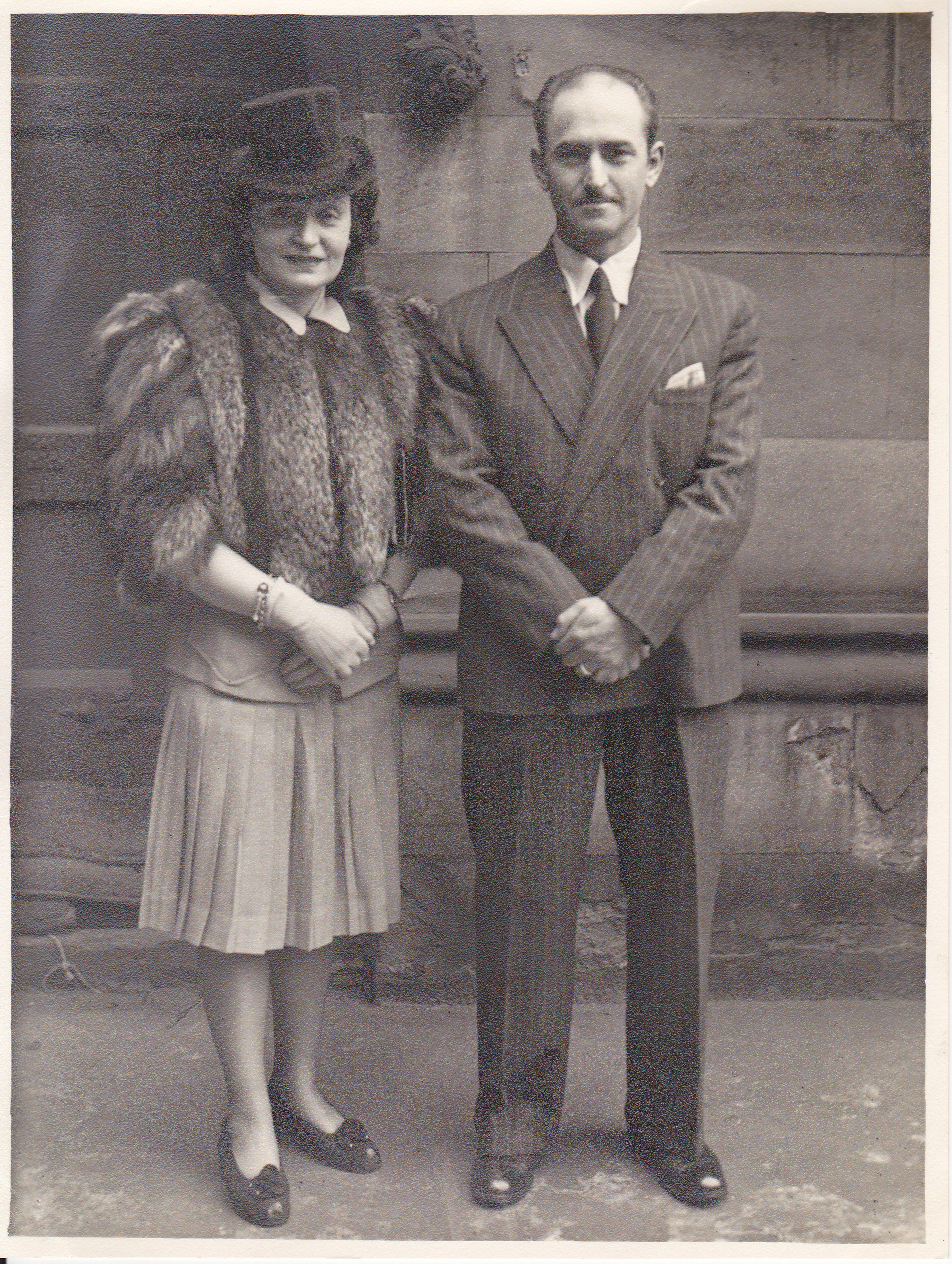
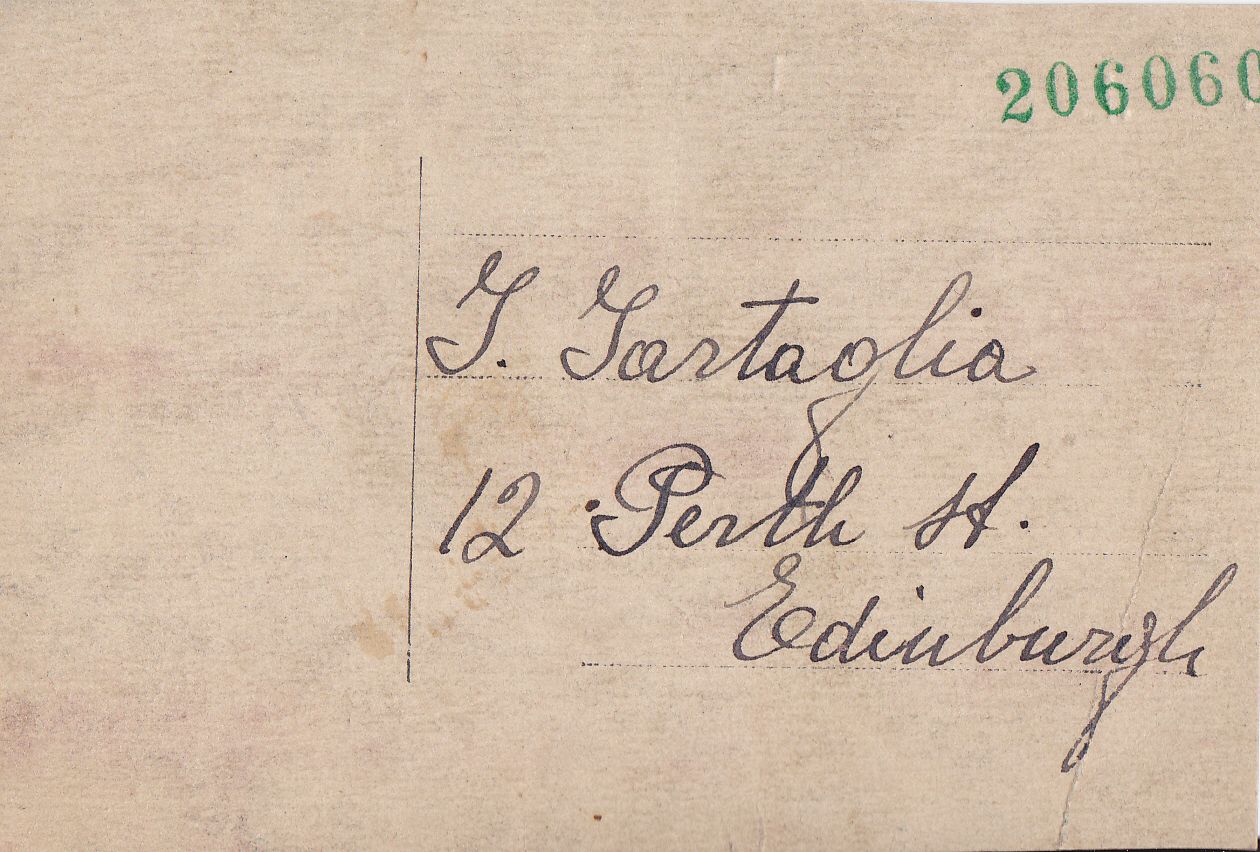
Fortunately they had a good neighbour who looked in on the children. Sylvia lived with the grand-parents and worked for them. The family moved to Sighthill, again without Sylvia, after WW2. (This is addressed on the back of the photo of Ralph and Theresa in Atina. Was it an old photo Ralph was sending to Tony his son?)
Sylvia worked in the family businesses, first in Haymarket F&C and then in her aunt Anna’s dress shop (Dumas) in Dalry Road. The war was a difficult time for them all. Antonio Tartaglia was an Italian citizen. He was interned in the Isle of Man. When the police came to take him they said ‘Mr Tarry, this is one of the worst things we’ve ever had to do.’ (He was well liked and respected.)
This photo of Antonio Tartaglia was taken pre-WW2. His wife was evacuated to Peebles. Of the family:
Dom was in the Army Service Corps (while his wife Carol kept the F&C shop they had in Corstorphine going.)
Ralph wasn’t well enough (TB) to serve but was interned in Saughton where he was well treated and the family could visit. Sadly he was moved from Saughton to disused stables in York and it was damp. His health deteriorated and he came home to die. Theresa, who kept the F&C shop on after her husband’s death, found it difficult to keep the business going during rationing.
Tony Tartaglia was in the Army
Raymond was too young, and worked in the F&C.
Sylvia was called up as a Land Girl. She was a conscientious objector and had to go to court! Her case failed. She was sent to Peebles. She got married soon afterwards.
Sylvia’s husband Peter De Luca, from Watford, was in the Pioneer Corps. (His younger brother Willie (16/17), who was born in Italy and never became a British citizen, was also interned in the Isle of Man for 4 months, just after his future grandfather-in-law was released. Aunt Ann’s husband, Louis Fusco, was also there. They were well treated with plenty food, even cakes. It was ‘like a dream.’ Willie describes it as a holiday camp – a row of sea-front boarding houses taken over as an internment camp, with the best (Italian) chefs from London doing the cooking. They played cards while the wives struggled back at home to keep the businesses and family going. Sylvia and her two aunts (Lena and Anna) visited them in the Isle of Man.
Tony Tartaglia during WW2
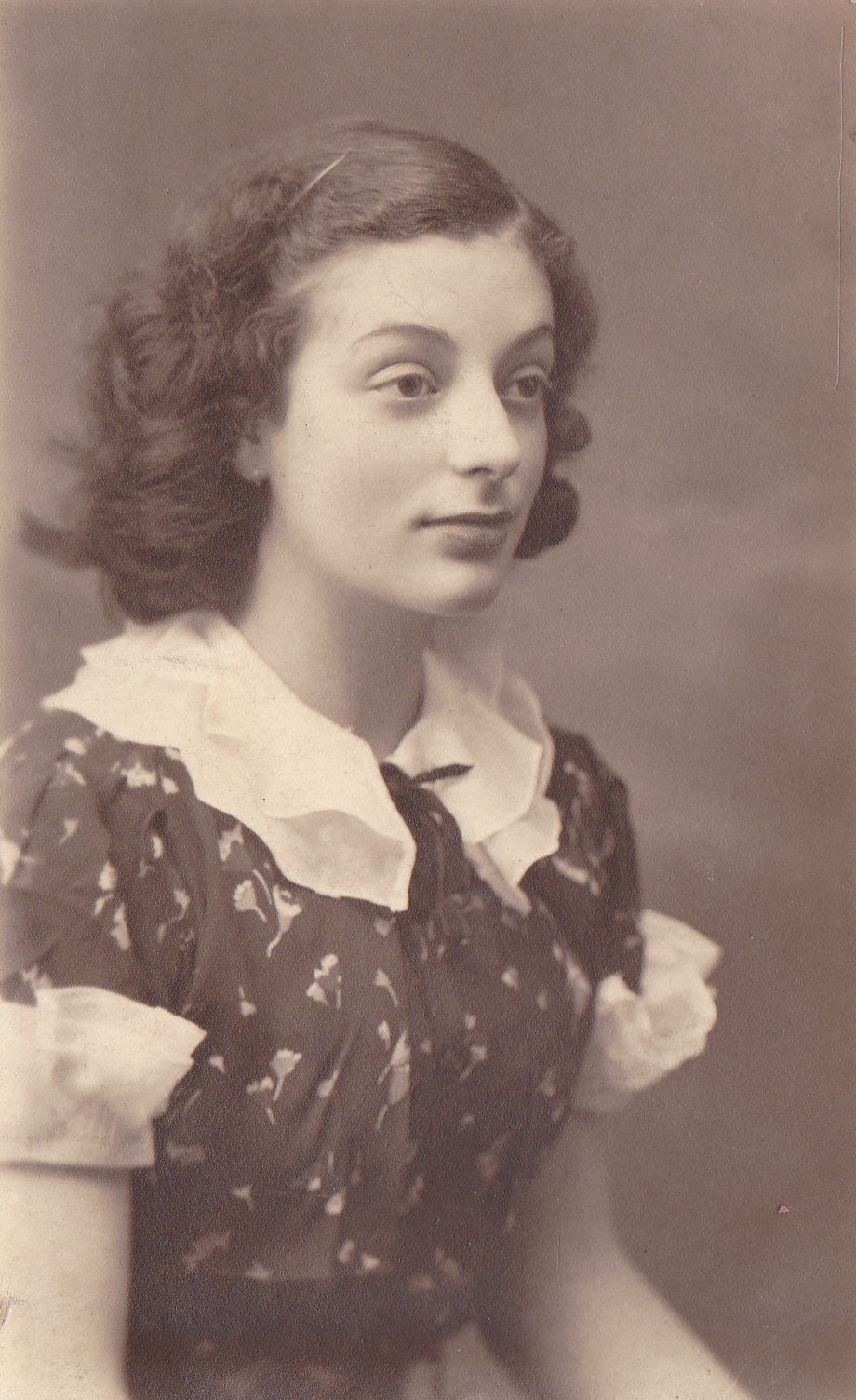
Sylvia aged 21, (1942) in a dress from Patrick Thomson’s.
It is the photo her father showed to Peter De Luca, thinking him a good potential son-in-law. Sadly neither her father nor grand-father was alive to ‘give her away’: her father had died after having been moved from Saughton to damp, disused stables in York; her grand-father had died after suffering a stroke while interned in the Isle of Man.
This is Peter De Luca circa 23 in 1939. The two families knew one another well. The Watford De Luca’s (Peter’s parents) would be in Atina at the same time as Sylvia’s grandparents. Peter and Sylvia married on 1/6/1943.
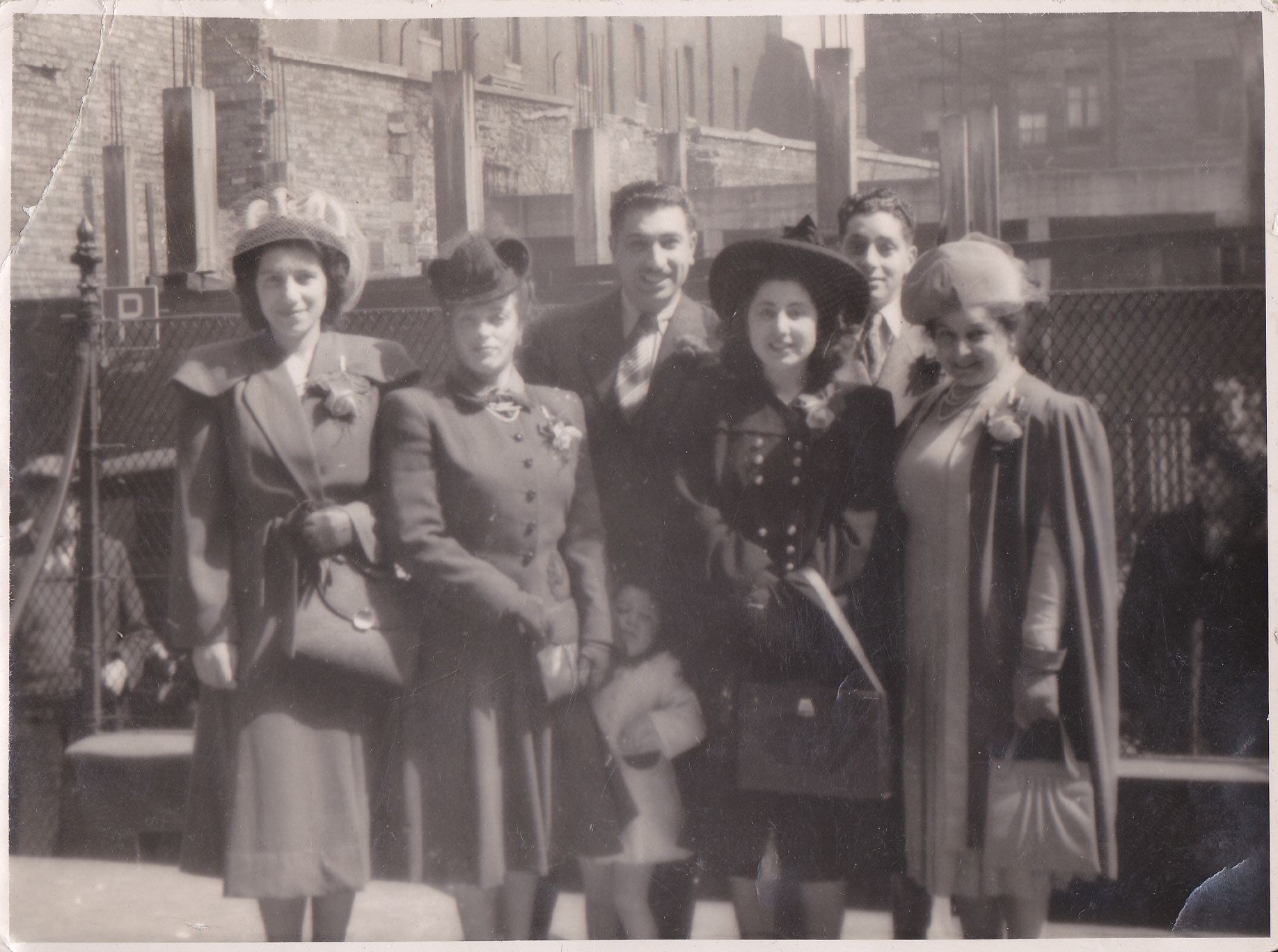
This was possibly taken at the wedding of Tony Tartaglia & Gloria circa 1950 – St Mary’s cathedral (maybe not). Phyllis Peter’s sister from Watford, Sylvia, Peter (Damian squashed in), a De Luca (Watford) niece (?), Raymond and mother-of-groom Theresa Tartaglia. Lydia married Willie De Luca in 1955. Two brothers were therefore married to two sisters. Back row: Cousin Norma di Rollo, Raymond, Willie, Lydia, Peter, Sylvia, Tony Front Row: Raymond’s wife Yolanda, Deanna
Damian circa age 8, 1956, with his parents, Willie and Lydia, and Auntie Lena. (Norma born Sept 1956). Possibly cousin Gina di Angelis’s wedding (married John Poletti). Anna also married Louis Fusco but it was a private registry office affair, circa late1940s?. No family attended.
The two young couples moved to Newtongrange in 1955 and ran a F&C shop and an ice cream parlour. While there, Theresa, the widowed mother of the sisters, married Peter Greco (‘Uncle Greco’), a widower from Dunbar (late 1950s).
A few years later Peter and Sylvia had bought the property and greengrocer’s business at 78 Newington Road and Willie and Lydia had a similar shop in Corstorphine. They built adjoining homes in Wilton Road.
Christine de Luca
De Luca
First generation
Donato De Luca (born 1865) and his younger brother (Louis) were brought up in single end in the relatively poor Calle area of Atina. Willie believes they were illigitimate as there was never any mention of a grandfather. (Unfortunately the records are no longer available.) This may have been a reason for his desire to make good and raise the family status in Atina. He would have been a day labourer (contadino). He was brought over to Clerkenwell, London as a young man, by a factor (go-between). His future wife, Angela Antonia Tomaso, from Cassino, (born 1880) was similarly brought over to Clerkenwell and went into service. She was 15 years younger than him. They married in the church in Clerkenwell circa 1898 when he was 33 and she was 18.
First of all he had merely a stall with 4 lemonade cases and a plank; later he had an ice cream handcart but had to protect himself with an iron bar slipped up his sleeve. They moved round quite a lot e.g. Midlands, Birmingham and around 1910 they moved to Watford where they established a F&C restaurant. She had 14 pregnancies including several miscarriages and a little girl who died aged 3. But 10 survived. Dominic, their firstborn was born in 1899.
The three eldest boys (Dom, Tony & Johnnie had dual-nationality and volunteered for the Italian army in WW1. Italy had wavered and eventually came in on the side of the Allies in May 1915).
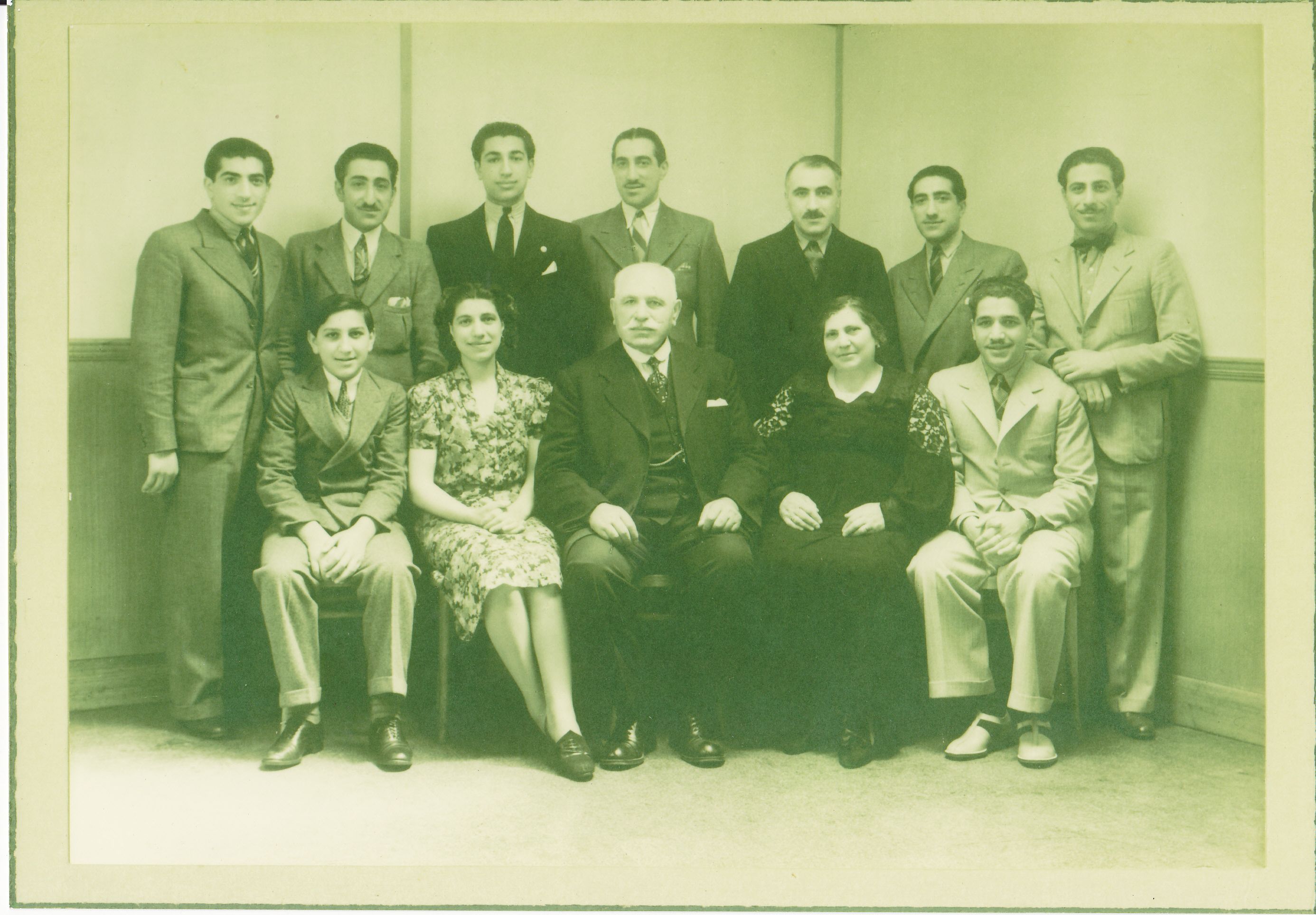
Back Row: Henry (5th, gambled!), Tony (2nd), Peter (9th), Johnnie (3th), Dominic (1st), Michael (4th), Freddie (7th) Front Row: Willie (10th), Phyllis (6th), Donato, Angela Antonia, Albert (8th)
Second generation
The business prospered and Donato and Angela De Luca had built a villa in Atina (1923) – 10 rooms, one for each of their family. Initially they rented their Watford business to a friend and rented somewhere to stay in Atina while the house was constructed. They stayed 2-3 years at that time. Albert, Phyllis and Peter were brought there and Willie was born in the house in 1924. The parents loved to go back to it for holidays, sometimes taking the younger children with them for extended periods. Both Tony and Johnnie got married in Atina. (Willie was confirmed in Atina (age 6/7 and Antonio Tartaglia was his godfather!) It was well appointed but when the war came, people looted it for firewood. They owned a vineyard below the road as well, and he built a property with 3-4 housing units in it.
The F&C shop continued successfully through long hard hours with family labour, and did brisk business during WW2. They gradually set up each son up in business. (Angela Clerk has a copy of her father’s recollections of family history.)
After he died (1940s), Angela made a bad deal and lost the land and houses below the road for a song (a million lire, worth virtually nothing then).
Angela lived till she was 92 and died circa 1972. She lived with daughter Phyllis. She travelled back and fore to Atina and would return with suitcases stuffed with beans, garlic, pots and pans from Atina.
Photo of Angela outside the house in Atina, when she was already a widow. (She was 15 years younger than Donato.)
The title of the family house was never secured properly either at that time. Willie continued to improve the house. It still belongs to the extended family and younger generations continue to enjoy staying there.
Christine de Luca
[/spoiler]